


Ladder Buying Guide
Ladder Buying Guide
Choosing the right ladder keeps your team safe and productive. This guide compares extension ladders, triple extension ladders, roof ladders, telescopic ladders and fibreglass step ladders, explains fibreglass vs aluminium and EN131, and covers the accessories you need.
We supply professional Lyte ladders – including the BT-specification Lyte 7A glassfibre telecom ladder – alongside Werner telescopic ladders and a full range of ladder accessories.

Which Type of Ladder Do You Need?
Each type of ladder suits a different job. Here is how they compare.
Extension ladders
Two or three sections that slide out to reach height, ideal for access to roofs, walls and poles. A triple extension ladder (3 section ladder) gives the most reach for its closed length.
Telecom ladders
Built for overhead line and pole work. The Lyte 7A is a 6m glassfibre ladder to BT 7A/7B specification; the Lyte 5B is a 6m aluminium ladder with pole rung support.
Roof ladders
A roof ladder lies on the roof slope and hooks over the ridge, giving safe access across tiles to chimneys, aerials and roof equipment.
Telescopic ladders
A telescopic ladder closes down very short for vans and tight spaces – the Werner 3.2m closes to just 1.02m – and is certified to EN131-6.
Step ladders
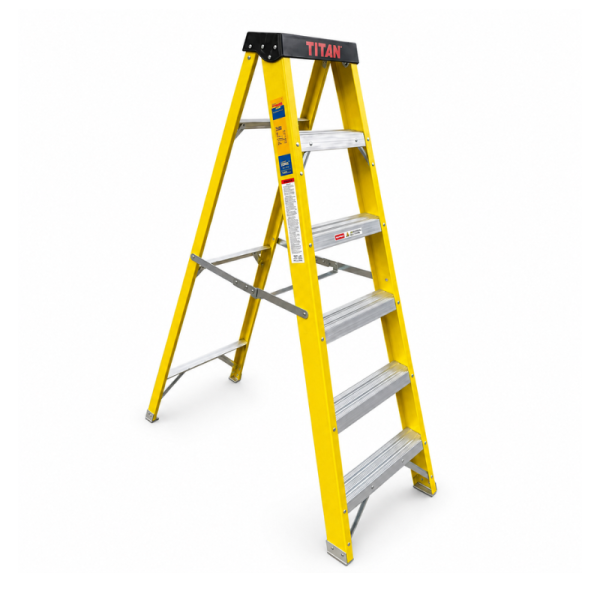
Free-standing fibreglass step ladders for indoor and cabinet work. Lyte Titan swingback step ladders come in 4 to 10 treads with a tool tray.
Ladder accessories
Ladder stand offs, ladder levellers, stoppers, rope ties, replacement feet and ladder inspection tags to keep ladders safe.
Compare Our Ladders
Specifications taken from each product page.
Fibreglass vs Aluminium Ladders
Fibreglass ladders (glassfibre) have non-conductive stiles, making them the safer choice for work near live electrical equipment, overhead power lines, lamp posts and telegraph poles. The Lyte 7A and Titan fibreglass step ladders are both non-conductive.
Aluminium ladders are lighter for their size and very durable – ideal for general access where there is no electrical risk, such as the Lyte 5B, triple extension ladder and roof ladder.
EN131 Ladder Standards Explained
EN131 is the European standard for portable ladders. Ladders are classed as EN131 Professional for trade and workplace use, or non-professional for domestic use. Telescopic ladders are covered by EN131-6.
For site and telecom work, choose a ladder rated for professional use – such as the EN131-2 Professional Lyte triple extension ladder and EN131 Professional Titan step ladders.

Ladder Safety & Inspection
Check your ladder before every use: feet, stiles, rungs, locks and labels should be in good condition. Record regular detailed inspections – a Lyte ladder tag holder and insert shows the last inspection at a glance.
A ladder stand off (ladder stay) holds the top 300mm from the wall and protects guttering, a Laddermat ladder leveller adds anti-slip footing on uneven ground, and replacement feet keep older ladders safe. Always follow HSE guidance on safe ladder use.

Lyte Ladders & Trade Ladders
Lyte 7A Glassfibre Telecom Ladder Lyte 5B Aluminium Telecom LadderLyte Triple Extension Ladder
 Lyte Roof LadderLyte Titan Fibreglass Step Ladder
 Werner Telescopic Ladder 3.2mLadder Stand Off / Stay
 Laddermat Ladder Leveller
Ladder FAQs
What is a triple extension ladder?
A triple extension ladder has three sliding sections, giving more height than a double extension ladder of the same closed length. Our Lyte Professional 3 section ladder extends to 6.92m from 2.93m closed.
What ladder should I use near electricity?
Use a fibreglass (glassfibre) ladder, which has non-conductive stiles. The Lyte 7A telecom ladder and Titan fibreglass step ladders are non-conductive.
Are Lyte ladders good for telecom work?
Yes. The Lyte 7A is built to BT 7A/7B specification and the Lyte 5B has pole rung support for pole work. Both extend to 6m.
What does EN131 Professional mean?
EN131 is the European standard for portable ladders. Professional-rated ladders are tested for trade and workplace use; telescopic ladders are covered by EN131-6.
Telescopic or extension ladder?
A telescopic ladder packs down very small for vans and tight spaces. An extension ladder gives more height and is the usual choice for regular access to roofs, walls and poles.
What is a ladder stand off?
A ladder stand off (or ladder stay) fits to the top of an extension ladder to hold it 300mm from the wall, widen its top to reduce twist and slip, and protect guttering.
Find the Right Ladder for Your Team
Tell us the job, the working height and whether there's electrical risk – we'll recommend the right Lyte or trade ladder.