
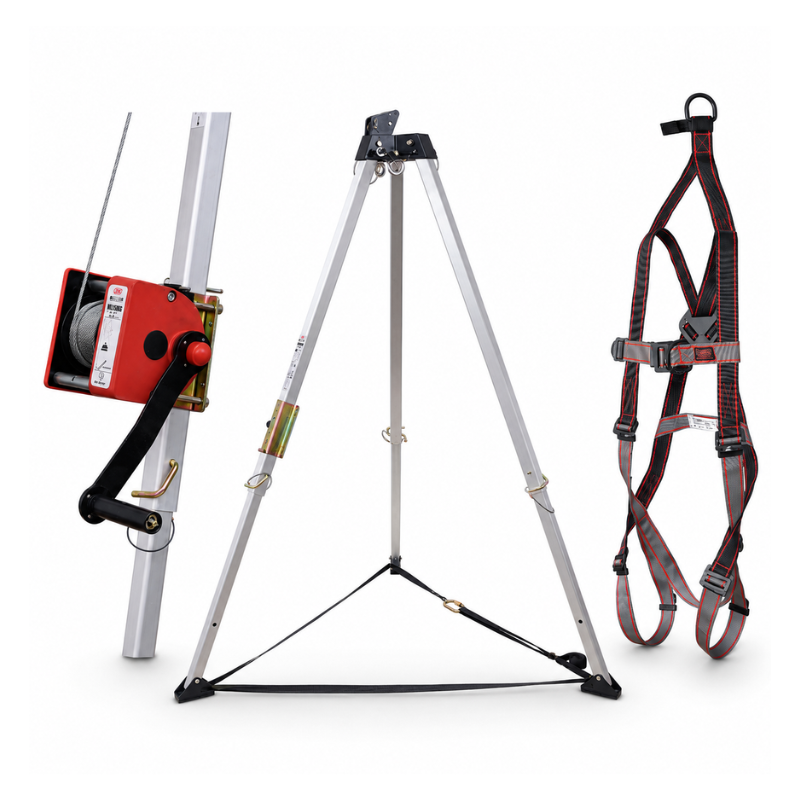
Complete Rescue System
JSP Confined Space Winch, Tripod & Harness Rescue Set
A complete confined-space rescue package combining a tripod, rescue winch and harness for planned vertical access and casualty retrieval applications.


Confined-space work can expose engineers to hazards that may not be immediately visible from outside the work area. Restricted access, hazardous atmospheres, limited escape routes and rapidly changing conditions mean that entry requires careful planning, competent personnel and suitable emergency arrangements.
Explore selected equipment for confined-space access and retrieval. The correct system should always be selected around the risk assessment, safe system of work and planned rescue procedure.
A complete confined-space rescue package combining a tripod, rescue winch and harness for planned vertical access and casualty retrieval applications.
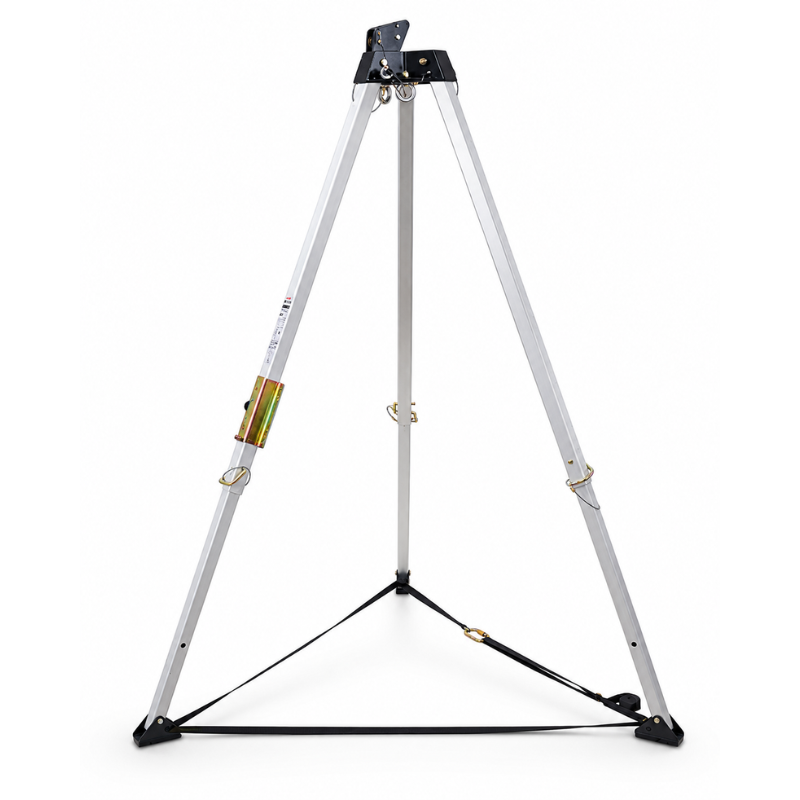
A portable tripod for creating an elevated anchorage above manholes, chambers and other vertical access points as part of a planned confined-space retrieval system.
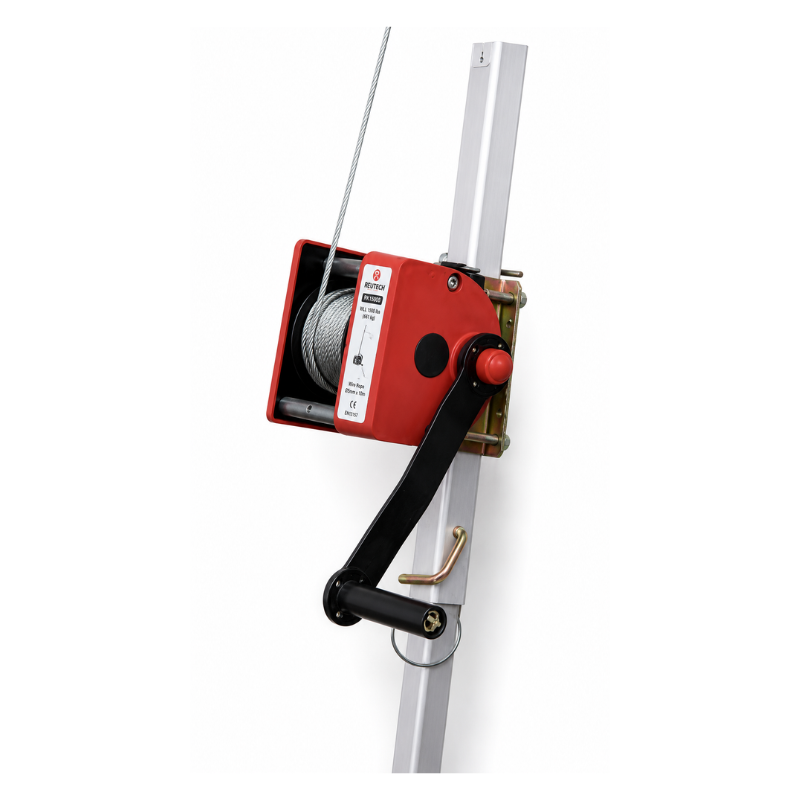
A mechanical retrieval system for controlled lowering and recovery where a winch forms part of the planned confined-space rescue procedure.
A confined space is not simply a small work area. The combination of enclosure, restricted access and foreseeable hazards can make an incident significantly more difficult to manage than the same event in an open environment.
A worker who becomes unwell, injured or unconscious may not be able to leave independently. Access points such as manholes can make recovery difficult, while atmospheric conditions inside the space can create hazards for both the worker and anyone attempting rescue.
Confined-space planning therefore needs to consider the complete activity: whether entry is necessary, what hazards are present, how work will be controlled and how someone could be recovered safely if an emergency occurs.
The exact hazards depend on the space and the work being carried out. A suitable risk assessment should identify the foreseeable risks associated with the specific task and environment.
Gases, fumes, vapours or insufficient oxygen can create conditions that are unsafe to breathe or capable of causing unconsciousness.
Flammable gases, vapours, liquids or materials may introduce additional fire or explosion risk within an enclosed environment.
Narrow openings and difficult entry points can make movement, evacuation and casualty recovery significantly more difficult.
Water entering chambers, tanks or underground spaces can introduce drowning, entrapment and escape risks.
Restricted ventilation can allow heat to build within the space, increasing the potential for heat-related illness.
Equipment, substances and the work itself can introduce additional hazards once entry has taken place.
Before planning a confined-space entry, consider whether the required work can reasonably be completed from outside the space. Inspection, cleaning, measurement or other activities may sometimes be possible without placing a person inside the hazardous environment.
Where entry can be avoided, many of the risks associated with confined-space work can be removed at source.
Where entry is necessary, suitable risk controls, competent personnel and appropriate emergency arrangements should be established before work begins.
A tripod, winch or rescue harness does not make confined-space entry safe by itself. Suitable equipment needs to form part of a properly planned system that considers risk assessment, competent personnel, atmospheric conditions, communication, access, supervision and a workable emergency and rescue procedure.
Where confined-space entry cannot be avoided, control measures should reflect the hazards identified during the risk assessment. The system of work should be understood by everyone involved before entry begins.
Depending on the environment, this may include isolating services, cleaning or purging the space, providing suitable ventilation, checking atmospheric conditions, controlling access and establishing reliable communication between those inside and outside.
Workers should be competent for the task and understand both the normal working procedure and what is expected if conditions change or an emergency develops.
Emergency arrangements are a critical part of confined-space work. Waiting until an incident occurs to decide how a casualty will be recovered can expose both the worker and would-be rescuers to additional danger.
The rescue plan should reflect the access point, depth, potential casualty position and hazards within the specific space. Equipment required for recovery should be identified and available before work begins.
Where vertical entry is involved, a suitable tripod, harness and retrieval system can provide a controlled means of access and recovery where identified by the planned rescue arrangement.
Vertical confined-space access through a manhole or chamber creates a particular rescue challenge. A casualty may need to be raised through a relatively small opening and may be unable to assist in their own recovery.
A tripod creates a stable overhead anchorage above the opening, while the winch provides controlled movement of the retrieval line. The harness provides the connection to the worker.
These components need to be compatible and selected around the planned system of work. The correct configuration depends on the access point, working depth, retrieval requirements and manufacturer instructions for the equipment being used.
One of the most serious characteristics of confined-space work is that some hazards cannot be identified visually. Oxygen deficiency and hazardous gases or vapours may be present without an obvious warning.
Where atmospheric hazards are foreseeable, suitable testing, ventilation and other controls should form part of the planned system of work. Conditions may also need to be monitored while work takes place where there is potential for them to change.
Respiratory protection or emergency escape equipment should be selected as part of a competent assessment of the specific atmospheric risk.
Confined-space incidents can expose rescuers to the same hazards as the original casualty. Emergency arrangements should therefore avoid reliance on improvised entry by colleagues. The recovery method, competent personnel and necessary rescue equipment should be determined before work begins.
Confined-space equipment may be safety-critical, but safe use depends on the people operating it. Workers need to understand the equipment, its limitations and how it fits into the site procedure.
Those involved in rescue arrangements also need to understand the planned recovery method and be capable of carrying it out without introducing additional uncontrolled risks.
Equipment should be inspected, maintained and used in accordance with the manufacturer's requirements and the organisation's established safe system of work.
Selecting the correct equipment is only part of safe confined-space working. Personnel also need the knowledge and practical competence to understand confined-space hazards, follow safe working procedures and respond appropriately if an emergency develops.
CTTS delivers dedicated confined-space training for the telecoms sector, providing practical training for personnel who may need to work in or around confined-space environments.
View Confined Space TrainingConfined spaces occur across many infrastructure sectors and are defined by the environment and foreseeable risks rather than one particular type of structure.
Telecoms, utilities and drainage chambers can combine restricted access with atmospheric and vertical-entry hazards.
Underground infrastructure may require controlled access for inspection, maintenance and infrastructure work.
Restricted openings and the potential presence of residues, gases or oxygen deficiency can create significant risks.
Atmospheric hazards, water ingress and difficult access can make entry particularly challenging.
Electrical, water and communications infrastructure can contain enclosed areas requiring controlled entry procedures.
Pits, vessels and enclosed process areas may require specialist entry and emergency planning depending on the work involved.
Confined-space equipment should be selected as a result of the risk assessment and rescue plan, rather than selecting equipment first and trying to build the procedure around it.
Consider the access arrangement, working depth, foreseeable atmosphere, communication requirements, potential casualty position and method of recovery before deciding what equipment is required.
For vertical entry, this may lead to a combination of tripod, winch and harness equipment. Other environments may require different controls or additional emergency equipment according to the risks identified.
Telenco UK supplies confined-space rescue tripods, winches, harnesses, brackets, complete rescue sets and emergency escape equipment for professional infrastructure applications. Select equipment around your risk assessment, safe system of work and planned rescue procedure.
Enquire About Confined-Space Equipment